

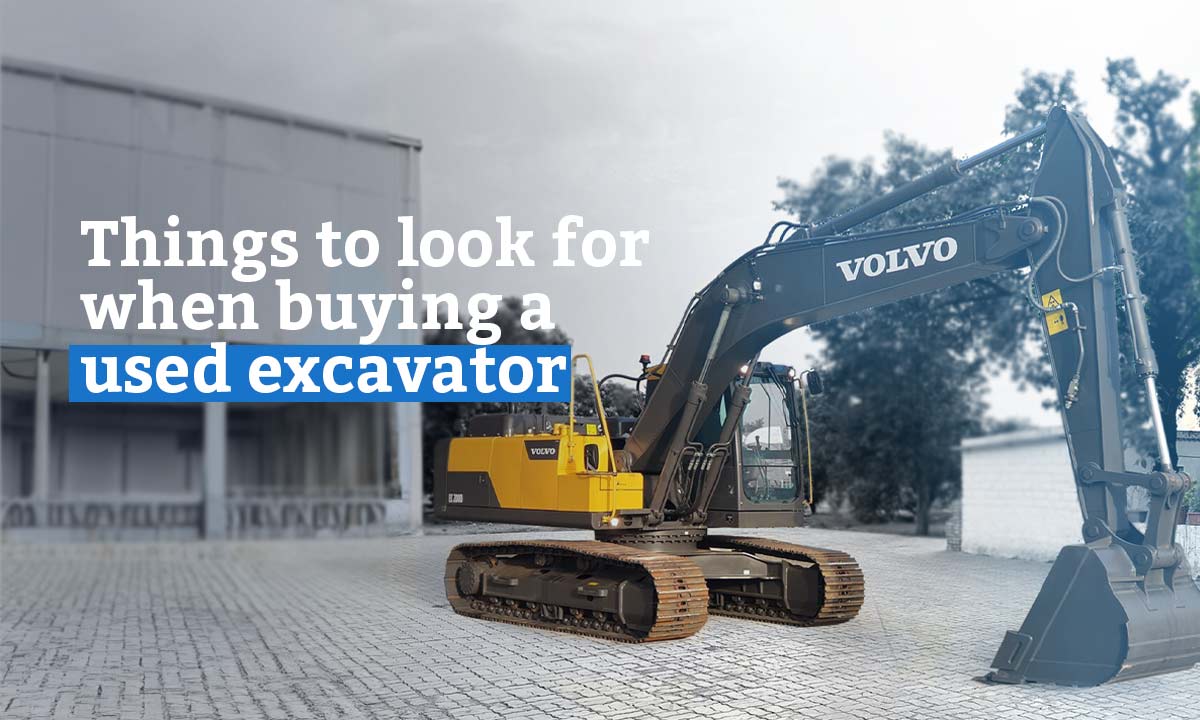
Investing in a used excavator is no easy task. Factors like service history, wear and tear, and price points should be thoroughly considered when choosing used excavators. Even seasoned earthmoving machinery owners might face difficulties if they are not informed about the pros and cons of the machine. These tips for buying a used excavator will help you make the decision with confidence.
7 tips for buying a used excavator
➤ Service History
A detailed and accurate service history shows that the used excavator has been maintained to an acceptable standard. Maintenance plays an essential part in maximizing the life of any machinery, so thoroughly check the service history before you invest.
➤ Check fluids and collect oil samples
Make sure all the fluids running through the machine are in prime condition. Oils and coolants should be clean and should not emit strange smells. Dirty coolant may indicate a cooling system issue that should be fixed immediately to prevent overheating of machine parts. If the oil is black, grey, or watery, that may indicate an engine problem, and the oil should not have a burnt smell. If the oil belongs to a major component, a laboratory sample will help you understand the root cause of any problem.
➤ Machine Hours
Confirm the operating hours of the machine and make sure they match the quotation and the mechanical meter. This is why you should have access to the full service history. You can also ask your local dealer to check the computer hours against the analogue meter. Your aim is to confirm that the hours on the machine match the data from the computer.
➤ Safety Compliance
Before you invest, make sure the excavator meets the requirements of your site. Check whether it has current dual locking standards and compliant handrails fitted where necessary. Flashing lights, reverse alarms, e-stops, and fire extinguishers are also required equipment. If the operator’s manual is missing, you can usually download a digital copy from the OEM’s website.
➤ Performing a ROPS/FOPS inspection
Make sure the excavator has adequate ROPS and FOPS fittings. Excavators work in hazardous environments such as construction sites, where falling debris can put the operator and the machine at risk, so a ROPS/FOPS inspection is essential.
➤ Undercarriage Inspections
The undercarriage is one of the most important parts of your machinery, and replacements or repairs can cost a fortune. Estimate the life left in this area. Check how many adjustments are left in the tracks before the idlers, and whether the rollers still have a profile and rotate freely.
➤ Hydraulic Operation
Check the excavator’s hydraulic operation in your working environment and under load. If that’s not possible, move the machine through all working scenarios. A modern excavator should be smooth, quiet, and efficient. Take note of any vibrations or noises that become more prominent under load.
With these tips for buying a used excavator, you can inspect the machine and its specifications thoroughly and make an informed decision. You can also seek help from a dealer to better understand the machinery you are investing in.
FAQs
-
What should I check first when buying a used excavator?
-
How can I verify the machine hours on a used excavator?
-
What is a ROPS/FOPS inspection?
-
Why is the undercarriage so important on a used excavator?
-
What do dirty or burnt-smelling fluids indicate?
Start with the service history, then check fluids, machine hours, safety compliance, ROPS/FOPS fittings, the undercarriage, and hydraulic operation. Together these give a clear picture of how the machine was treated.
Compare the hours on the meter with the quotation and the service history. You can also ask a dealer to check the computer hours against the analogue meter to make sure they match.
ROPS stands for roll-over protective structure and FOPS for falling object protective structure. The inspection confirms that the cab will protect the operator from rollovers and falling debris on hazardous sites.
Undercarriage repairs and replacements can be very expensive. Checking track adjustment, idlers, and rollers helps you estimate how much life is left before you buy.
Dirty coolant can point to a cooling system problem, while black, grey, watery, or burnt-smelling oil can indicate an engine problem. Take oil samples for lab testing if the fluid belongs to a major component.
Related Posts


Post a Comment